Generative AI models can read a drawing, summarise a calculation note or suggest a plausible value. It is tempting to ask them directly: “can this tower take one more antenna?”. That is precisely what we do not do. At TriDyme, AI does not design the structure. It prepares the data, runs the validated calculation engine and checks the result.
A structural calculation carries liability
A calculation note is not an opinion. It demonstrates that a structure can withstand the loads set by the standards, and it commits the engineer who signs it. It must therefore be:
- reproducible: the same inputs always give the same result;
- verifiable: an inspection body must be able to redo the calculation and find the same values;
- compliant: with the Eurocodes and their national annexes, for example EN 1993-3-1 for towers.
A language model has none of these properties. Its answer can change from one run to the next, it can produce a convincing but wrong figure, and it cannot explain in a checkable way how it got there.
That is why calculations on the platform are run by a deterministic engine, whose calculations have been validated by an inspection body. The resulting deliverables carry engineering liability and are insured.
What AI does: everything around the calculation
In an engineering file, the calculation itself takes a small share of the time. The rest is finding, reading, reconciling and checking data. That is where AI is useful.
Before the calculation, it prepares the data. It reads archive documents (calculation notes, as-built files, drawings), extracts the technical data, reconciles it with the surveyed equipment and flags discrepancies. Every proposed value carries its source: document and page.
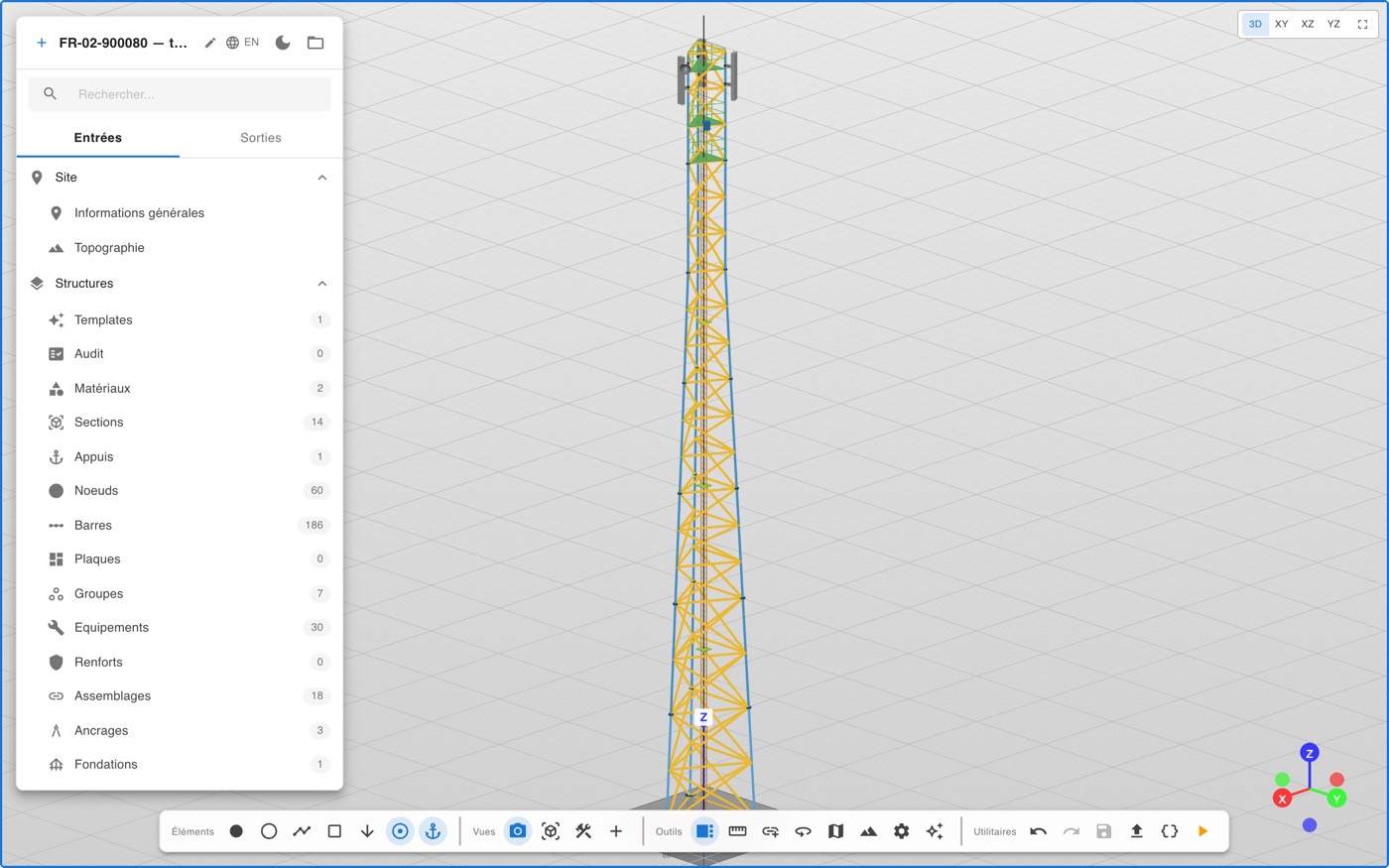
It runs the engine. Once the inputs are approved, the calculation is run by the validated calculation engine, on one site or thousands.
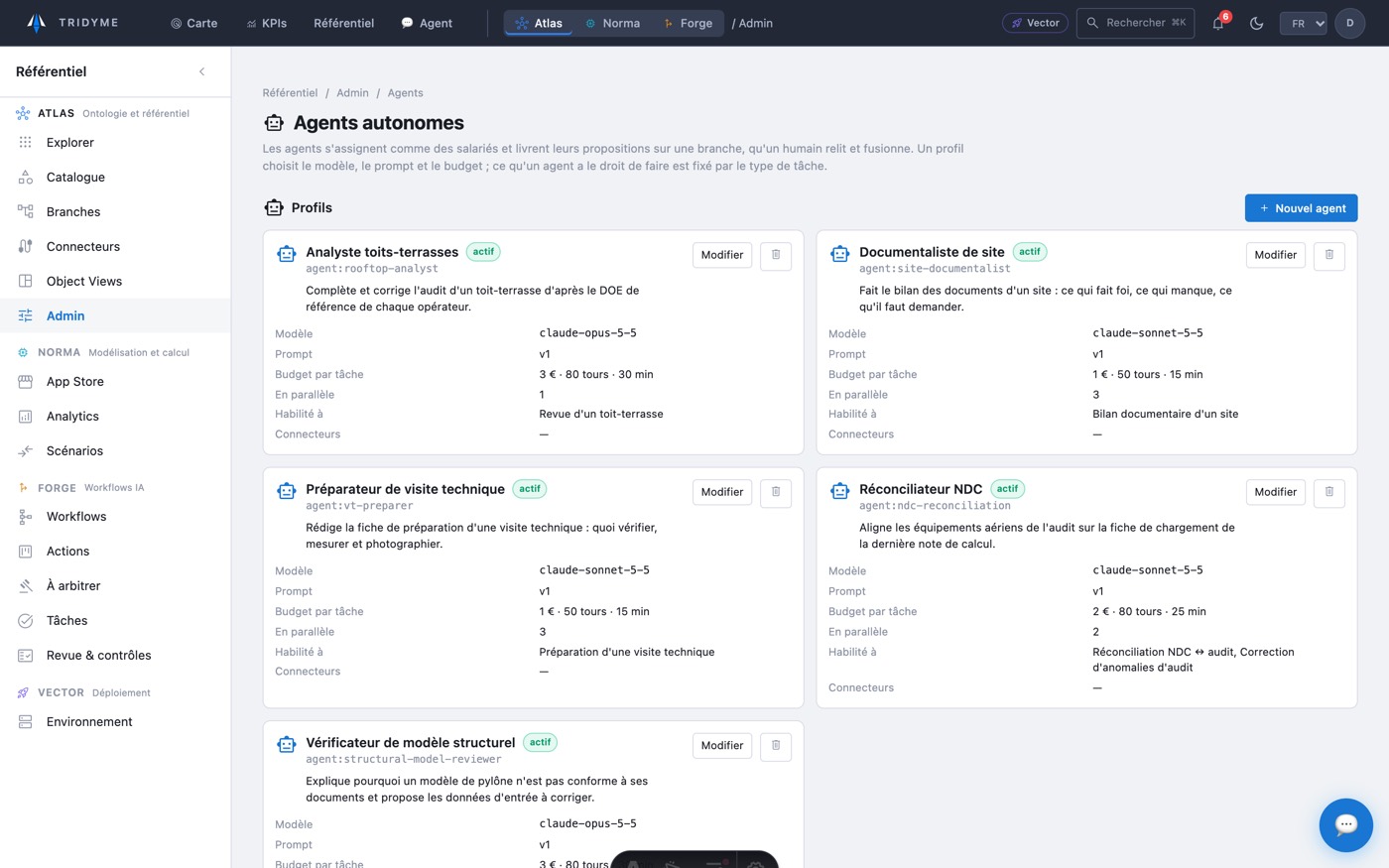
After the calculation, it checks and explains. When a model does not match its documents, an agent compares it with the latest as-built file and calculation note, identifies the problem and proposes the input data to correct — never a calculated value.
A human in the loop, at every binding step
AI proposals never change the reference data directly. They are placed on a branch, like a proposed code change: an engineer reviews the diff, then merges or rejects it. Every decision is logged: who approved, when, on which data, with which calculation result.
This approach has two benefits:
- the engineer stays in control of what goes into a calculation note;
- the tedious work of collecting and reconciling data is automated, so a whole portfolio can be processed rather than one file at a time.
The right division of roles
| Step | Who does it |
|---|---|
| Read and structure documents | AI, with a confidence level per data point |
| Reconcile documents with installed equipment | AI, every discrepancy sourced |
| Approve the input data | An engineer |
| Calculate | The validated deterministic engine |
| Check the consistency of the result | AI, then the engineer |
| Sign the deliverable | An engineer |
Key takeaways
- A structural calculation must be reproducible, verifiable and compliant: that is the job of a deterministic engine, not a language model.
- AI brings its efficiency where time is really lost: reading, reconciling and checking data.
- Every AI proposal is sourced, reviewed and approved by an engineer before it is used.
Want to see how it works on your data? Discover the platform and our AI agents, or talk to an expert.