An intelligence layer on top of your systems
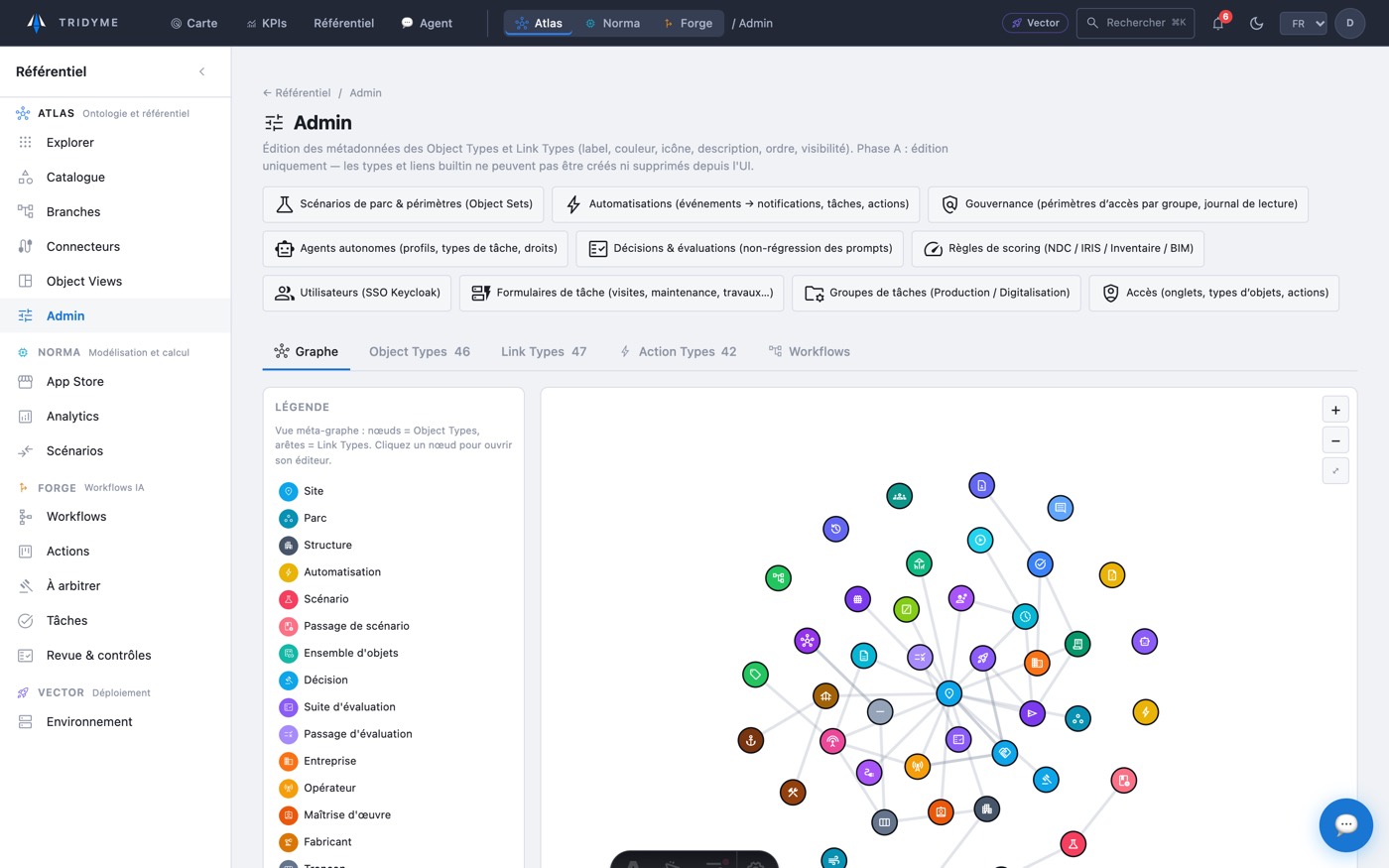
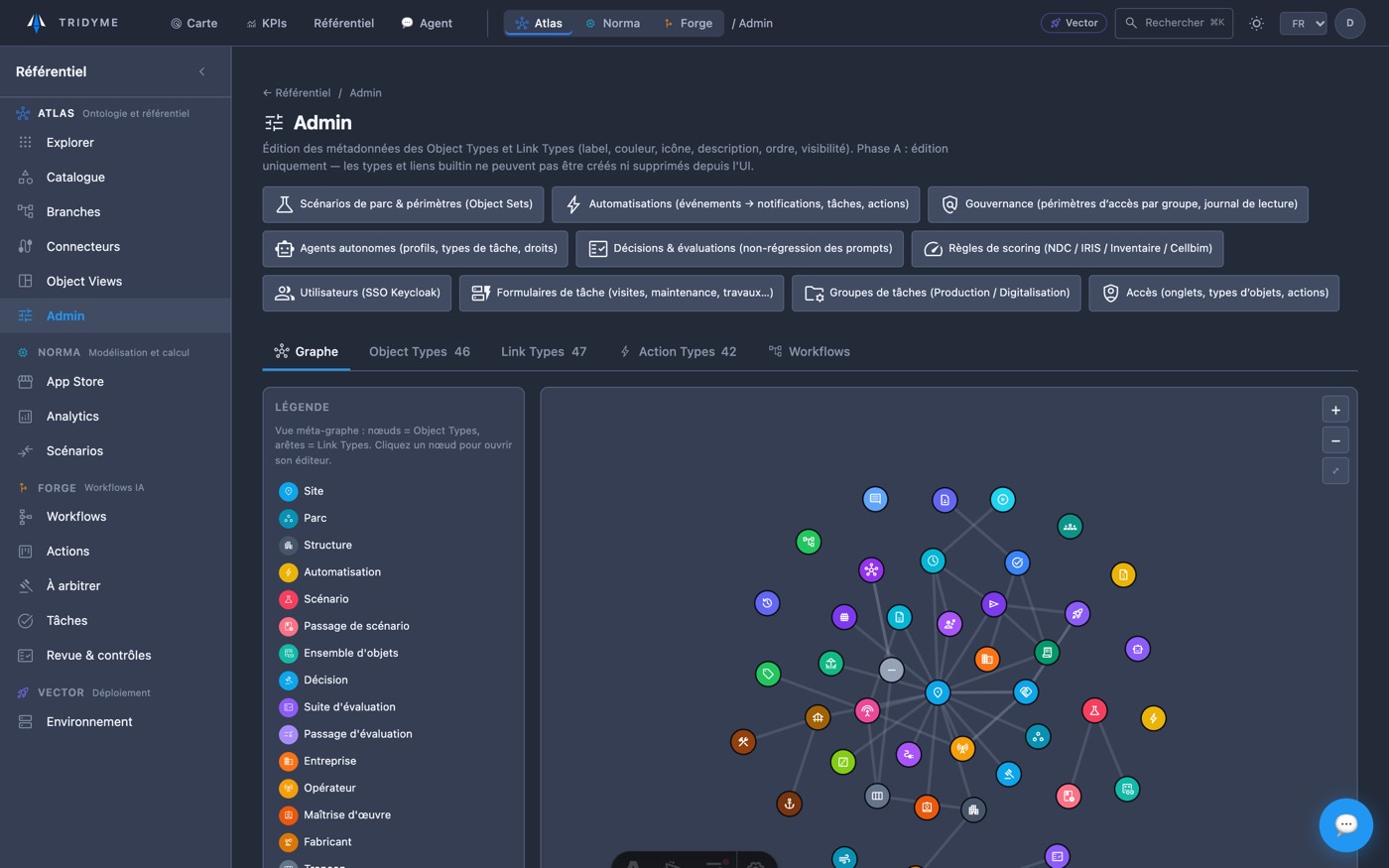
An ontology that describes your assets and connects to your systems. On top of it: the asset register, validated engineering calculation and AI workflows, always validated by an engineer.
Your company’s vocabulary
We model your real-world objects and the links between them. Each object points to its source in your existing systems: nothing is copied, nothing is migrated.
What the ontology holds
- Business objects: site, structure, equipment, document, calculation, project, intervention
- The technical properties of each object and how reliable they are
- The links: which equipment on which structure, from which project
- The history: the state of the asset at any past date
- Business rules and applicable standards
What it enables
- Query a whole portfolio in one request
- Calculate and analyse at scale on reliable objects
- Let AI agents work on structured data
- Deliver the result in the business team’s own tool
Atlas, Norma and Forge
Atlas — asset intelligence
Your archives become a register you can query, calculate on and keep up to date.
- Ontology: business objects, properties and links
- Connectors to ERP, document management, BIM, project management and GIS tools
- Automatic reading and structuring of archive documents
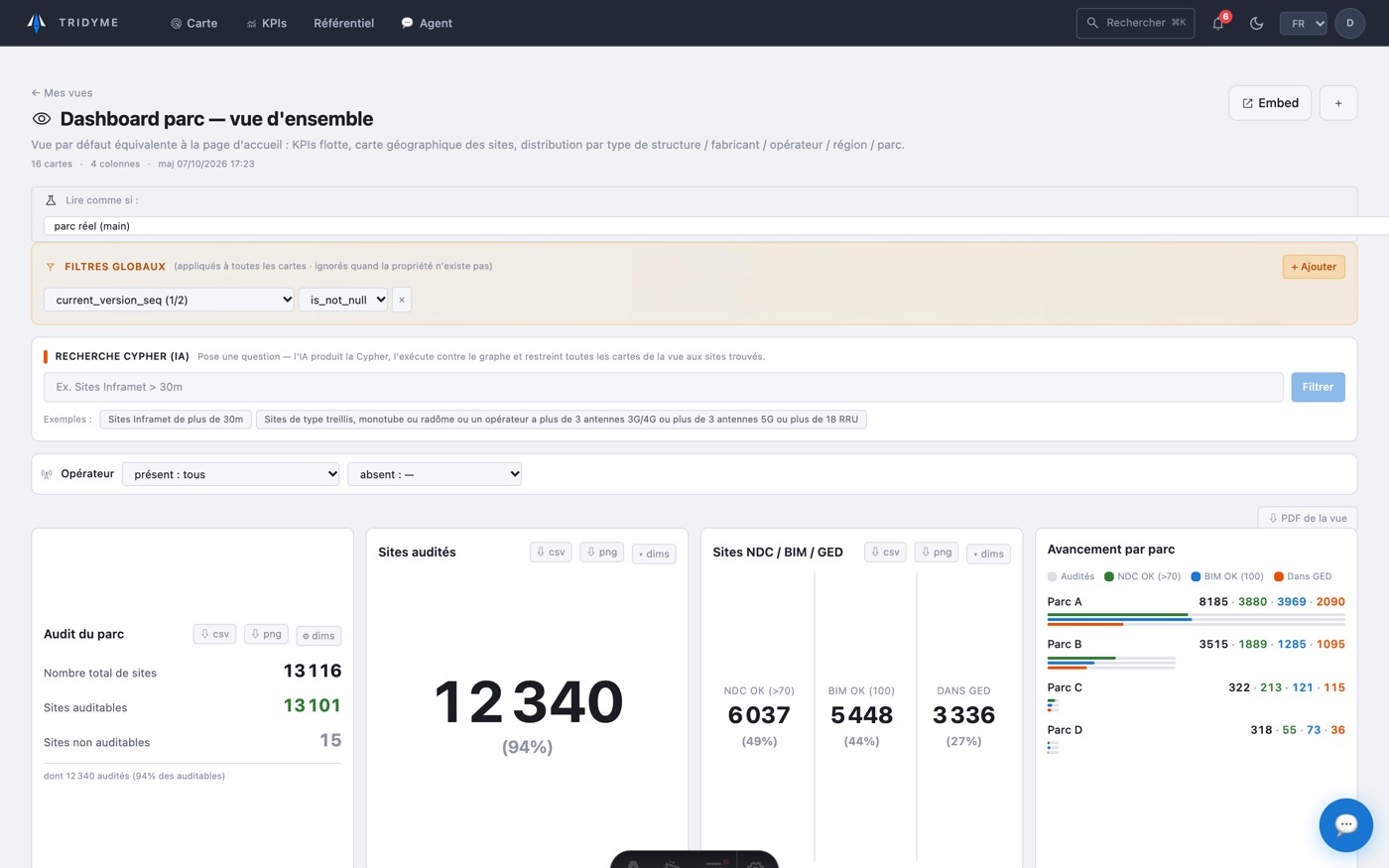
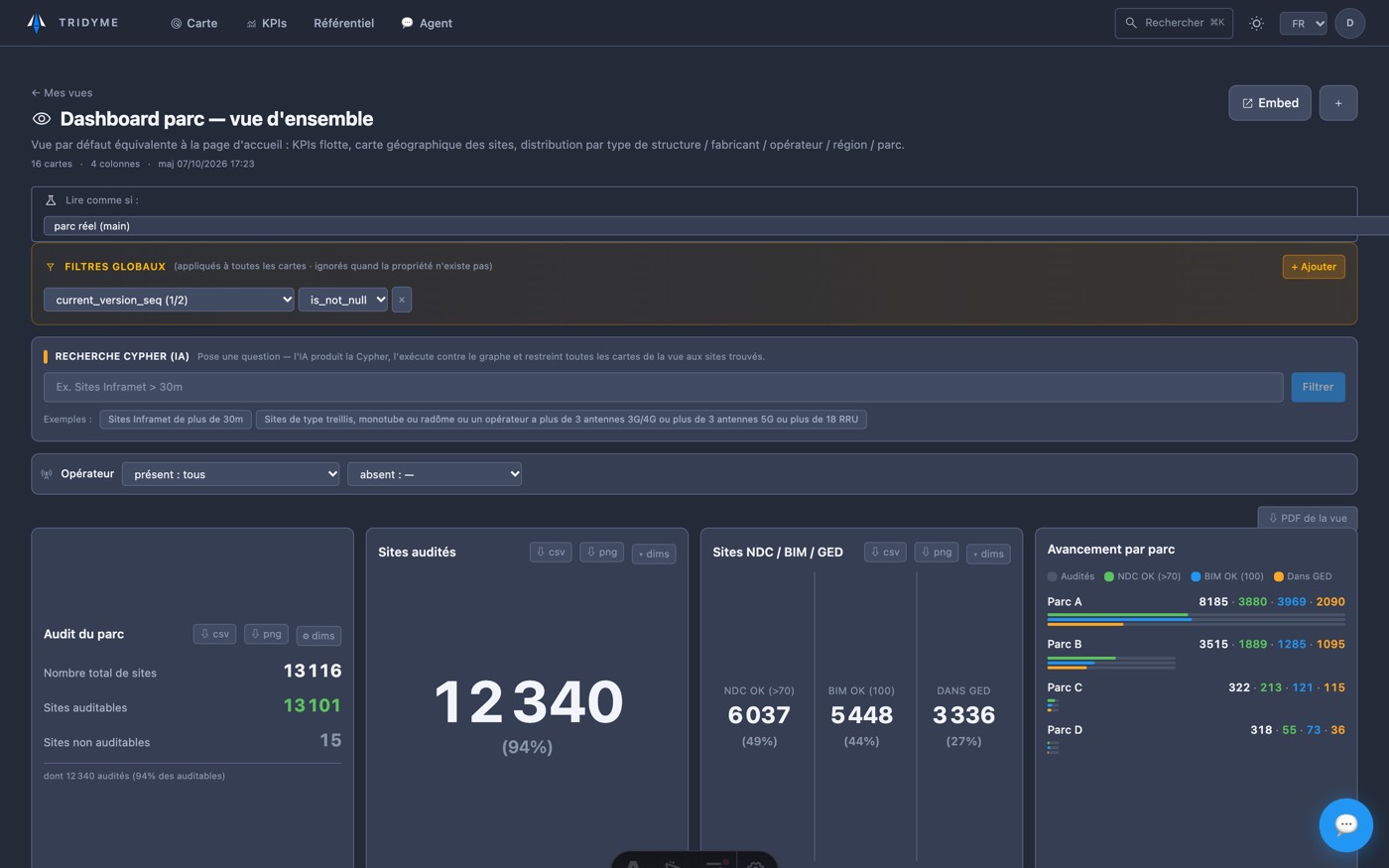
- A continuously enriched register, with a confidence level for each data point
- Portfolio analytics: mapping, prioritisation, investment scenarios
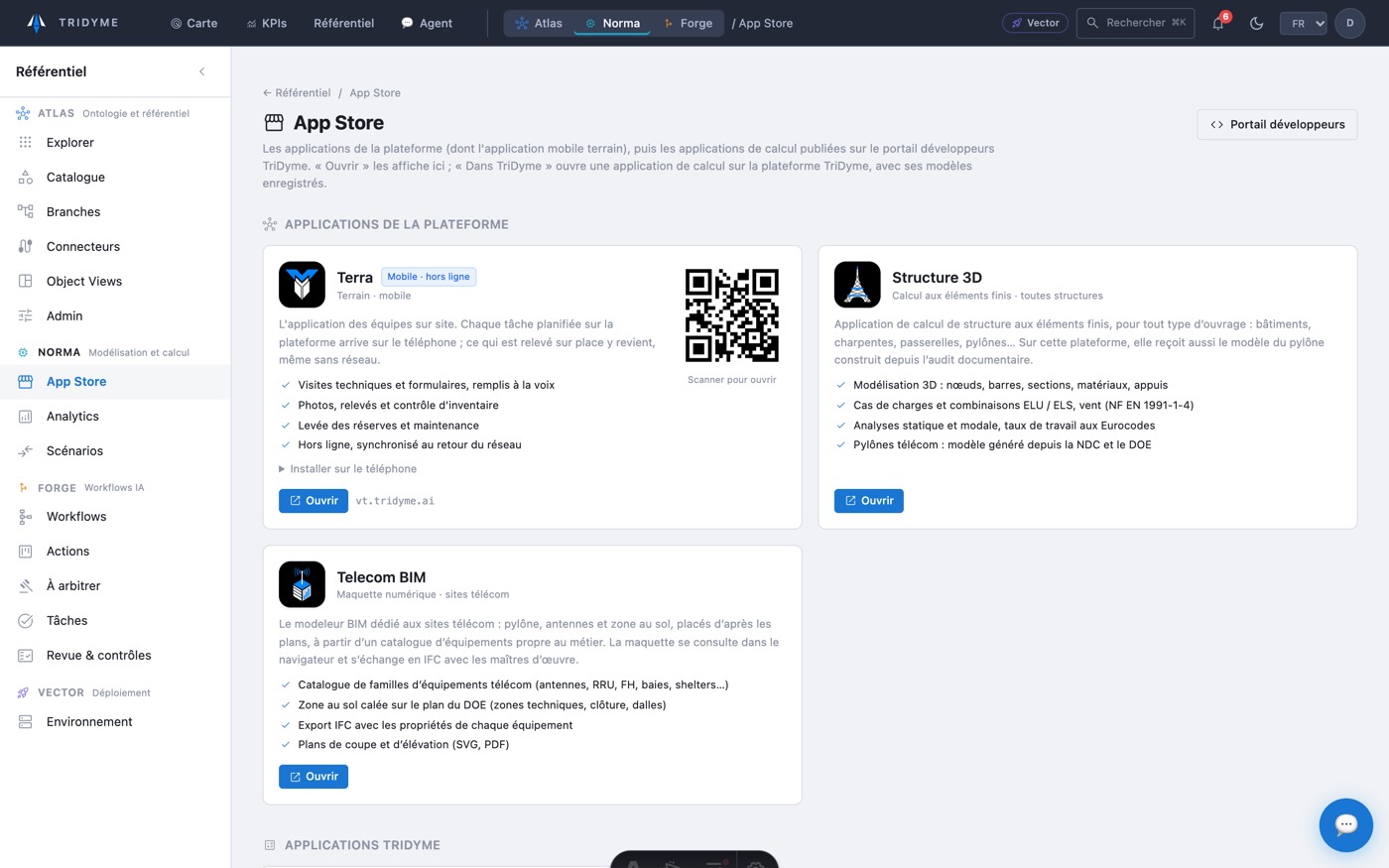
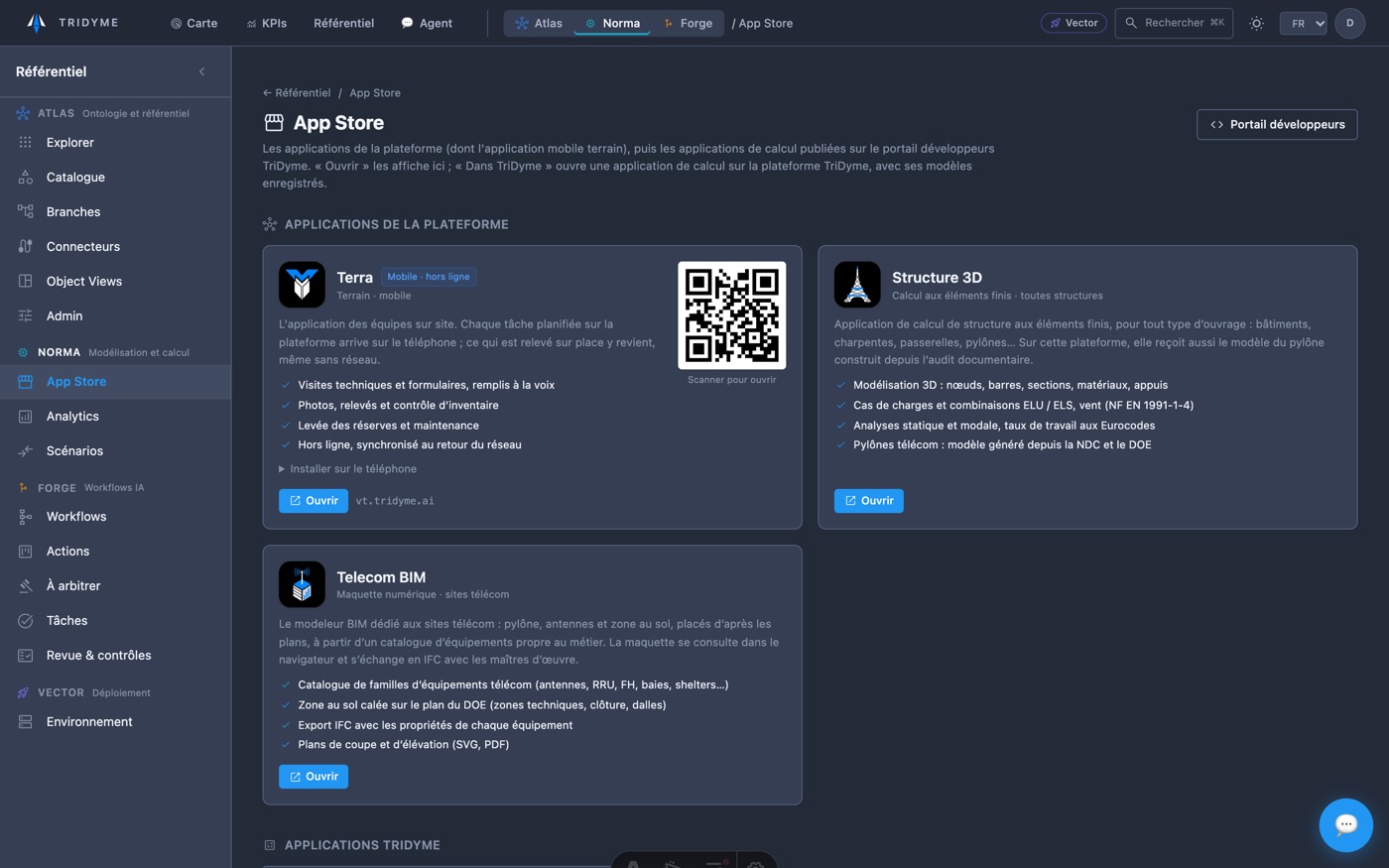
Norma — validated modelling and calculation
What an expert does on one file, run across an entire portfolio.
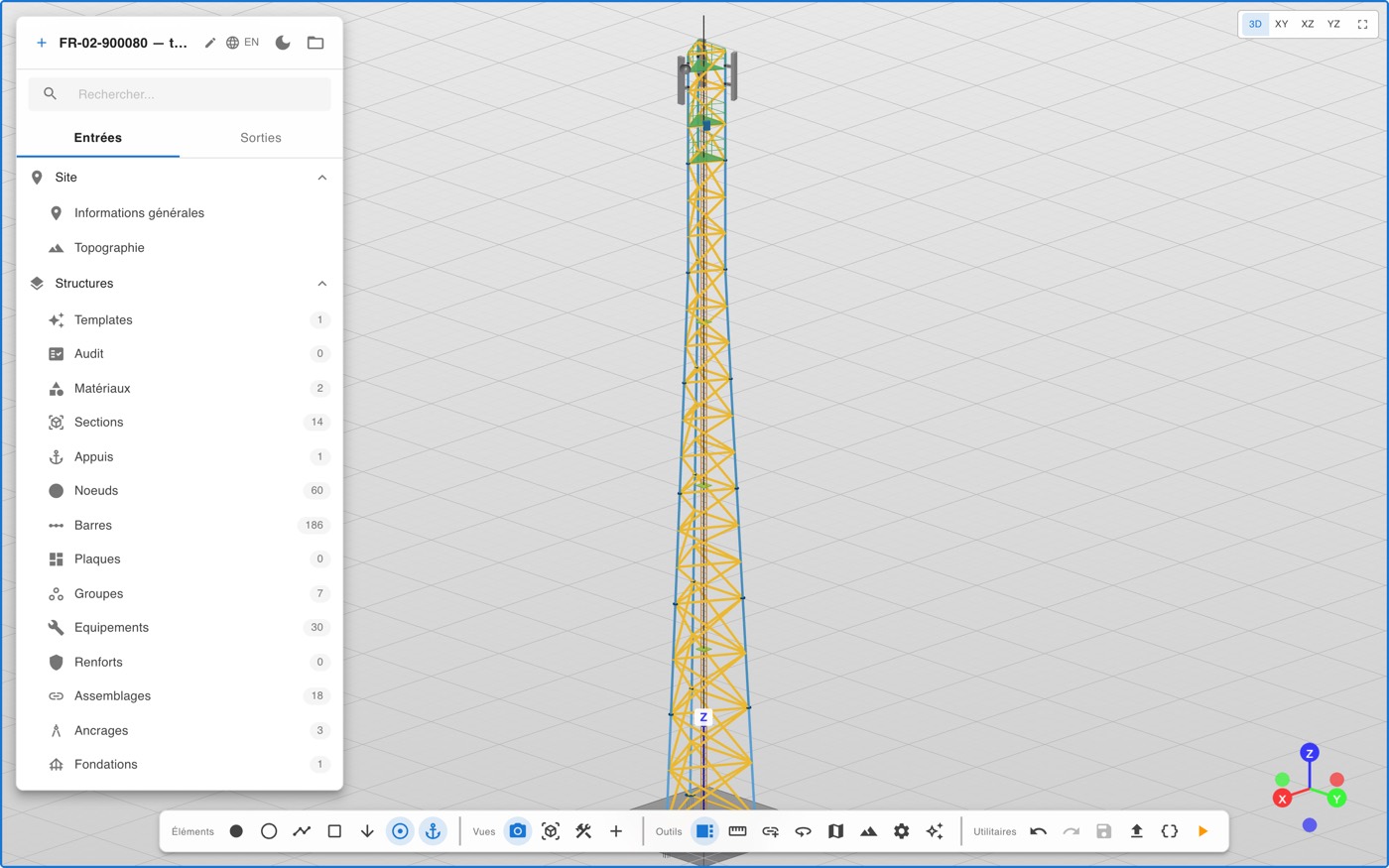
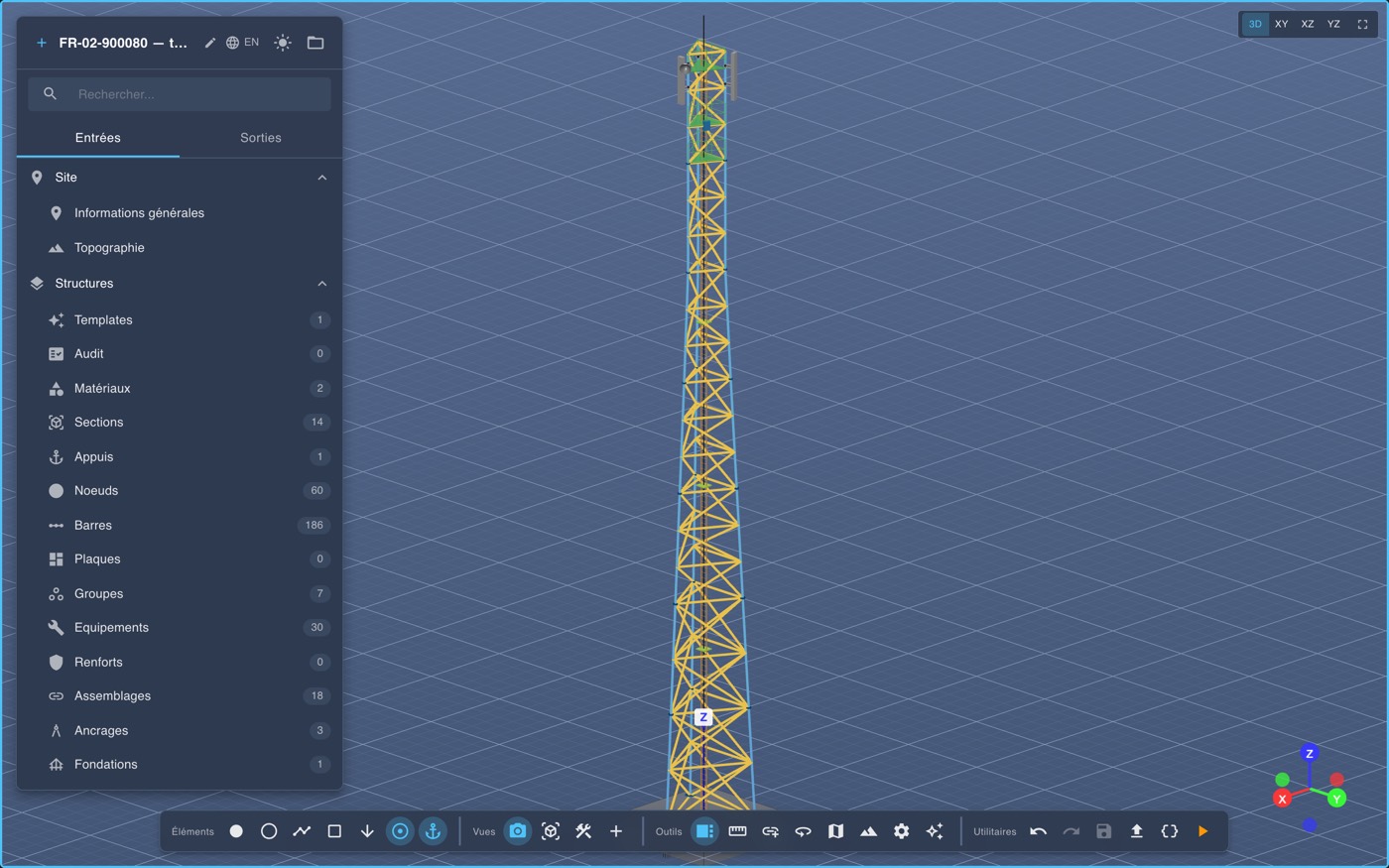
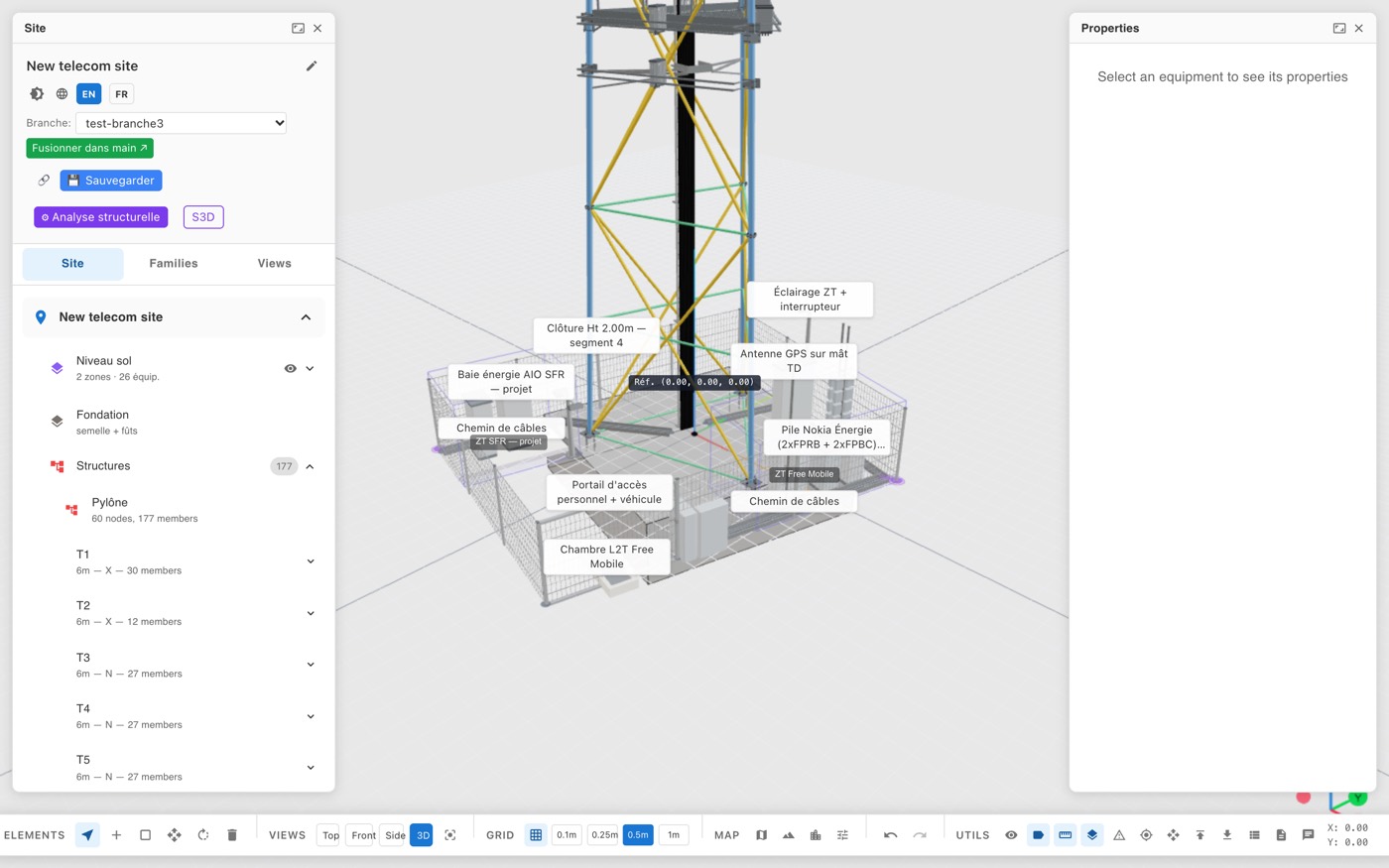
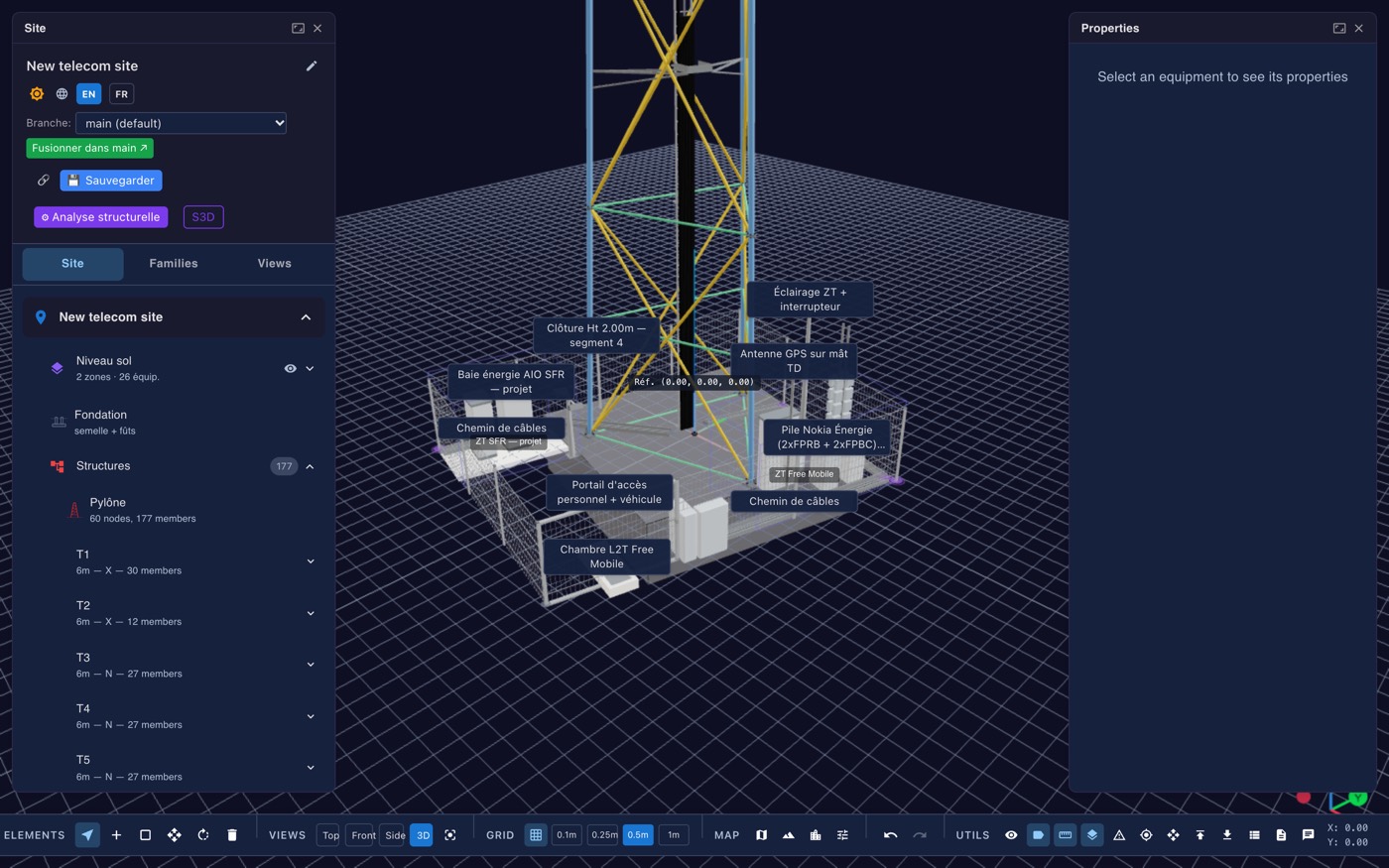
- 2D and 3D modelling of structures, from surveys or archives
- Deterministic calculations to current standards, validated by an inspection body (Socotec)
- Large-scale execution on thousands of structures
- Deliverables: calculation notes, BIM models, DWG and DXF drawings
- Review mode: checking notes produced by third parties
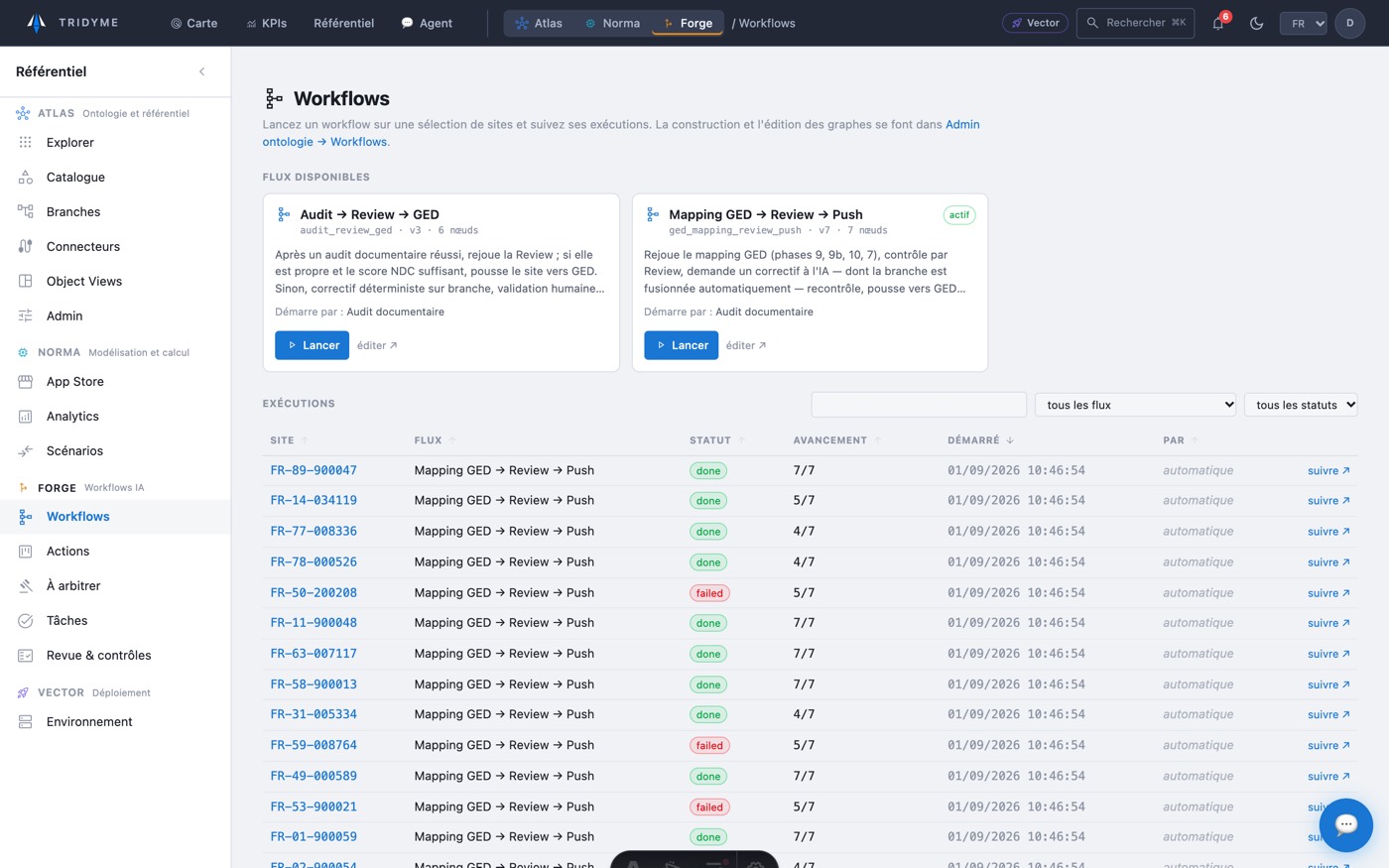
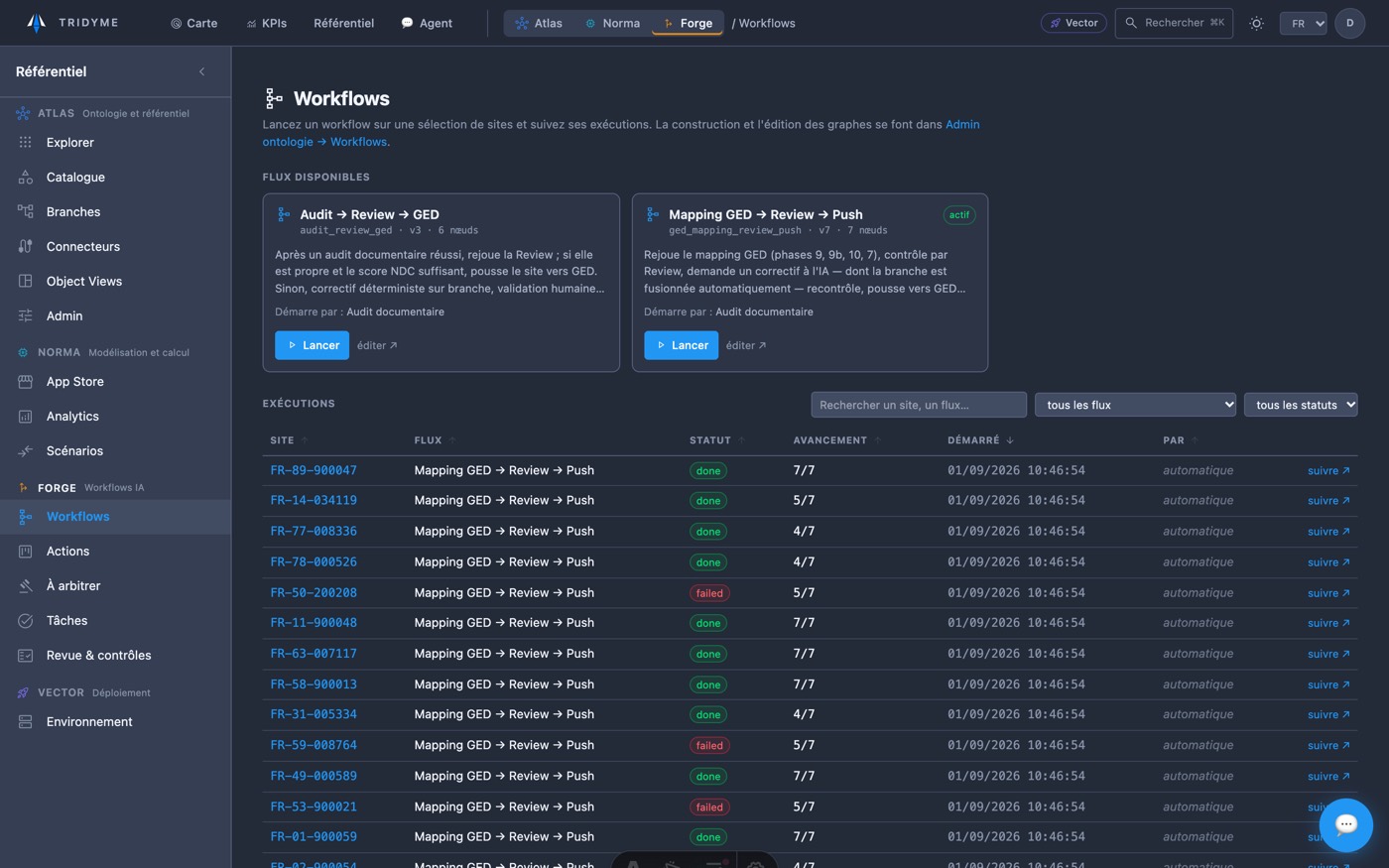
Forge — AI workflows
The process is no longer written in a procedure: it is executed, measured and improvable.
- Agent chains configured on your actual process
- Event triggers: new document, new request, sensor alert
- Human approval at binding steps, with a decision log
- Results delivered in your tool: ticket, file, notification
- Autonomous AI agents assigned like team members
- Current status: Available
AI does not design the structure. It prepares the data, runs the validated engine and checks the result.
A human in the loop at every binding step
Reviewed proposals
Any change proposed by an agent remains a proposal until a human has reviewed and approved it.
Decision log
Every approval is recorded: who, when, on which data, with which calculation result.
Engineering liability
Deliverables carry engineering liability and are insured.
Data stays where it is
Atlas reads your systems, exposes them and writes back to them: ERP, document management, BIM, project management, GIS, sensors.
Connectors
SAP, Autodesk ACC, Sitetracker and your other business systems.
API and applications
Platform data and results are exposed to your systems through APIs and connectors, and calculation apps can be called from your workflows.
Reversibility
No lock-in: data stays in your systems and the ontology can be exported.
Deployed engineers, not remote support
The Forward Deployed Engineering model: the person who understands the business is the one who builds the solution, on your premises, on your data.
The profile
A domain engineer and full-stack developer: the same person talks to an operator in the morning and ships the workflow in the afternoon.
The pace
No specification gets lost between the business and the vendor: fixes take hours, not weeks.
A first workflow in production in 48 h
A workshop with your business teams and IT, then two days of building on your real data.